Editable Jewelry Card Display Card 4 Review for Graphics and Print Templates
In my years as a brand designer and content marketer, I have seen countless graphic design assets come across my desk. Most are forgettable, but some possess that elusive quality of immediate professional appeal. Recently, I evaluated the Editable Jewelry Card Display Card 4, a versatile asset from the Print Templates category designed specifically for the jewelry niche. This review is not just about aesthetics; it is about how this tool functions within a real-world marketing campaign to elevate brand identity and drive audience trust.
First Impressions: Setting the Mood for Premium Branding
The moment I opened the file, the mood was set. The design exudes a sense of curated elegance without feeling cluttered or overly ornate. For a brand owner launching a new collection, the first impression is everything. This template creates an emotional tone of sophistication and care, which is critical when selling handmade products or lifestyle goods. It feels suitable for both casual branding and premium visuals, striking a balance that many designers struggle to achieve.
Unlike generic clipart that can make a business look amateurish, this asset suggests intentionality. It supports commercial design goals by providing a clean canvas that allows your product photography to shine. Whether you are refreshing social media visuals or preparing a digital campaign, the visual hierarchy here is intuitive. It guides the eye naturally, ensuring that the jewelry remains the hero while the card provides a stylish frame. This is exactly the kind of modern design element that helps small business owners compete with established brands.
Real-World Application in a Product Launch Campaign
To understand the true value of this asset, imagine a scenario where a boutique jewelry maker is launching a summer collection. They need to create a cohesive content kit that includes Instagram posts, Pinterest pins, email banners, and physical packaging inserts. This is where the Editable Jewelry Card Display Card 4 becomes indispensable. Instead of designing each graphic from scratch, the entrepreneur can use this Canva template to maintain consistency across all touchpoints.
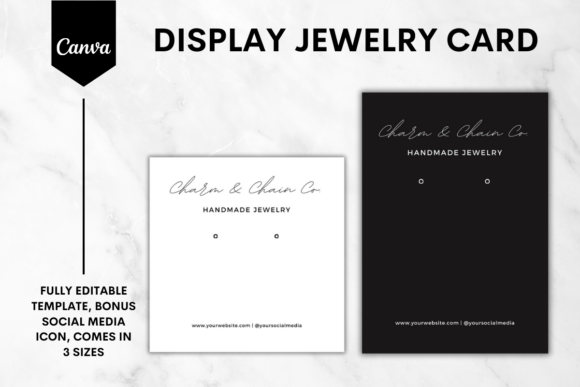
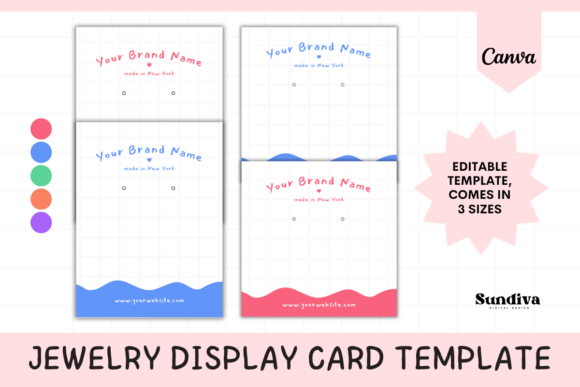
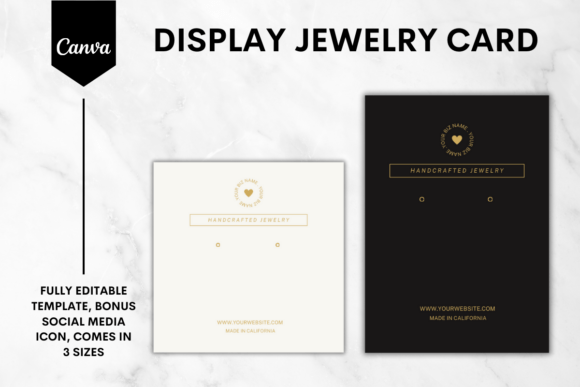
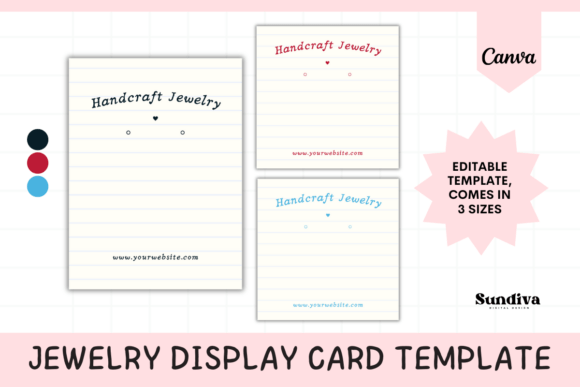
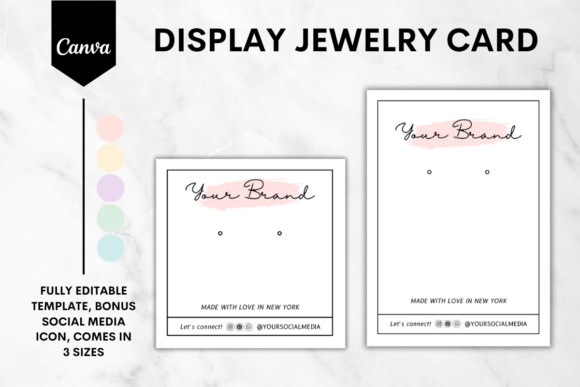
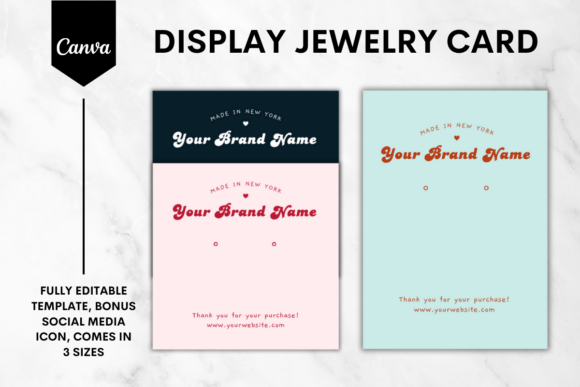
I tested this workflow by integrating the card into a mockup for a seasonal offer. The three available sizes—2.5″x3.5″, 3″x4″, and 2″x2″—allowed for seamless adaptation. The smaller 2″x2″ version worked perfectly as a sticker for packaging accents, adding a tactile element to the unboxing experience. Meanwhile, the larger dimensions served as excellent product labels or social media graphics. This flexibility transforms a single design asset into a comprehensive solution for content marketing, saving hours of production time while ensuring a polished look.
Strategic Versatility Across Marketing Channels
The utility of this template extends far beyond simple display cards. In a broader marketing strategy, it can support various channels including Facebook ads, digital ads, and blog graphics. When used as part of a design bundle, it helps create a unified visual language that strengthens recognition. For instance, using the same design motif on a lead magnet, a media kit, and a website header creates a subconscious connection for the audience.
This asset is particularly powerful for visual hierarchy. It structures information so that key details stand out without overwhelming the viewer. For bloggers and publishers, it serves as an attractive editorial layout element. For online coaches and creative entrepreneurs, it acts as a decorative brand element that adds personality to otherwise plain text updates. By incorporating this printable design into your workflow, you ensure that every piece of content looks intentional and professional.
Where This Design Asset Excels
There are specific areas where this template shines brighter than others. It is ideal for hero graphics and campaign headers where you need to capture attention immediately. As a product launch visual, it frames the item beautifully, enhancing perceived value. Social media covers benefit from its balanced composition, making them look like high-end editorial designs rather than hastily made posts.
Furthermore, it works exceptionally well as a branded template for recurring content. If you are a digital seller creating SVG design or PNG design files for clients, this can be a foundational element. It also serves as a great addition to content bundles, offering added value to customers who purchase your main products. The ability to customize colors and text means it adapts to any brand identity, making it a staple for professional branding efforts.
Cautions and Strategic Limitations
However, no single asset is a magic bullet. There are scenarios where Editable Jewelry Card Display Card 4 should be used carefully. For formal corporate branding, the aesthetic might feel too whimsical or niche. Dense information layouts may suffer if the card competes with essential data points; in such cases, simplicity is key.
Small mobile graphics require scrutiny. While the template offers multiple sizes, very small displays might render fine details poorly. Additionally, if your brand relies on low-contrast backgrounds, the design elements might get lost, reducing impact. Overly minimal brands might find the style slightly too detailed, preferring stark white space instead. Text-heavy ads should avoid this asset unless it is used purely as a background element, as it could distract from the primary call to action.
Essential Notes for the Professional Designer
Before integrating this into a paid campaign or client work, there are several technical checks you must perform. First, test it with your specific brand color palette. Ensure the tones harmonize and do not clash with your existing logo design. Check black and white usage to guarantee legibility across different mediums.
Place the design inside real campaign mockups to see how it translates from screen to print. Preview it on mobile screens to verify readability in small sizes. Compare it against competitor visuals to ensure it stands out positively. Pay close attention to typography pairing; check how it pairs with serif fonts, sans-serif fonts, script fonts, handwritten fonts, and display font styles. The right combination can elevate the design, while the wrong one can ruin the flow.
Review spacing and balance meticulously. Finally, confirm commercial licensing before using it in digital product sales or business branding. Understanding these nuances ensures that you maximize the potential of this creative marketplace find. By following these guidelines, you transform a simple template into a powerful tool for audience trust and engagement.
In conclusion, the Editable Jewelry Card Display Card 4 is more than just a pretty picture; it is a strategic component for anyone looking to refine their product presentation. It supports stronger first impressions, clearer messaging, and memorable campaign visuals. For designers, marketers, and creative entrepreneurs, it represents a smart investment in visual consistency that pays dividends in brand perception.